
The City of Colors - Living in Paris
In Paris, the last scars of the Notre-Dame fire are healing. At the same time, greenery is growing around the cathedral and many other urban spaces. Living along the Seine is becoming a mix of community life and climate resilience. An exploration.
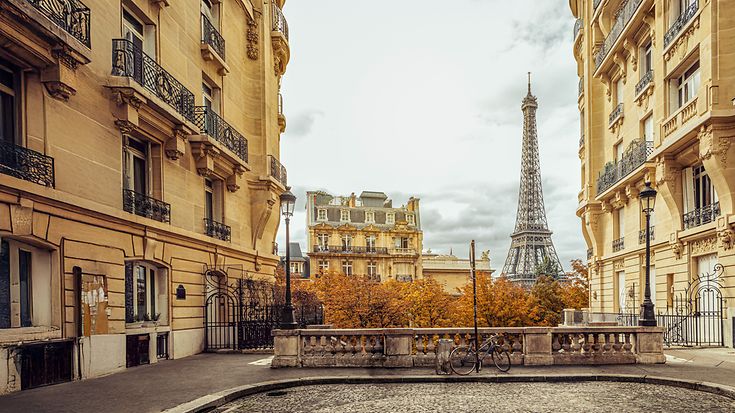
Climate risks are no longer a distant threat, they are shaping the way cities function and how people live. For the German insurance industry, understanding and supporting climate resilience is increasingly important: heatwaves, floods, and extreme weather events translate directly into insured losses, making climate resilient urban design a matter of risk management.
Paris, a dense European metropolis, offers an important example. Since 2014, the city has been reshaping streets, housing, and public spaces to reduce heat stress, manage heavy rainfall, and strengthen social inclusion. Its approach demonstrates how thoughtful urban planning can serve as a form of risk prevention by protecting both residents and urban infrastructure.
Along the Seine, young birch trees already hint at September yellow, while pedestrians, cyclists, and joggers move through spaces that were once dominated by cars. Artists unpack their prints, and traces of the 2024 Olympic Games remain along the riverbanks. Here, everyday life and climate resilience coexist, offering lessons for cities and insurers alike.
A few years earlier, cars still drove along this riverside route. But then Anne Hidalgo became mayor and gently but firmly pushed cars away from the river and out of hundreds of city streets. Together with Parisians, she removed asphalt from parking spaces, planted trees and shrubs, built a dense cycling network, and installed drinking fountains and sun shades for hot days.
At the time, Paris was suffering from heat, noise, and emissions. In the summer heatwave of 2003, more than 1,000 people died in the city, the highest number anywhere in Europe.
Paris was also deeply divided. The ring road, the Boulevard Périphérique, separated rich and poor. Inner-city rents rose to up to 40 euros per square meter. In the banlieues, the outer housing estates, thousands of cars burned, and three young people died during unrest.
Since taking office in 2014, Mayor Anne Hidalgo has reshaped Paris by linking social and environmental urban planning. Today, Paris is seen worldwide as a model city that combines social justice with climate neutrality and climate adaptation.
It is no coincidence that this happened in Paris, the city where the world first agreed to take climate change seriously. In 2015, one year after Hidalgo took office, 195 countries signed the Paris Climate Agreement, committing to limit global warming to 1.5 degrees.
The social nature of design
At Place Farhat-Hached in the 13th arrondissement, green grass grows between and alongside the tram tracks. It almost looks as if the tram is moving through a meadow. The surrounding Masséna-Bruneseau district, right next to the ring road, has been changing for over ten years: from an industrial area into a mixed neighborhood of housing, culture, and business.
International architects have designed climate-adapted buildings up to 180 meters high. Each building looks different, reflecting the diversity of the people who live or work there. Each one combines different materials, greenery, and uses.
The “Home” building, for example, rises lightly to 13 floors. The levels are slightly shifted, as if a child had stacked building blocks. Depending on the time of day, the façade shines in shades of gold and silver. Green balconies and rooftop terraces wrap around the building like ribbons.
Half of the 188 apartments are social housing, the other half are privately owned. On the ground floor, shops, a library, a gallery, and a bakery form a meeting place that stays lively all day.
Across the grassy intersection, twin towers rise 39 floors high, housing shops, a restaurant, and a hotel. Ivy, vines, and moss climb the dark glass façade. On the back side, between railway tracks and the city highway, a wooden path leads through a small biotope that feels like an herb garden. Men in suits and women in business outfits sit on wooden benches during their meeting breaks, surrounded by wild plants.
A diversity of transport
Paris aims to be a city where everyone can find a home and access public services and culture. This is the first sentence of the Bioclimatic Urban Development Plan, updated in 2024, ten years after its first version.
The plan naturally combines climate protection and adaptation to heat and heavy rain with support for public housing, neighbourhood projects, local crafts, and small shops. Old buildings are renovated instead of torn down. Over the past ten years, Paris has invested 16 billion euros in this transformation.
Paris has 2.2 million residents, with 20,000 people per square kilometer. Around 4 million commuters travel into and out of the city every day. About 60 million visitors come to Paris each year.
Cars drive at 50 km/h on the ring road and 30 km/h inside the city. The central 1st arrondissement is closed to through traffic. Car use has dropped by 40 percent in recent years.
Cyclists can use a network of 1,000 kilometers of bike lanes, often separated from car traffic. Paris increasingly feels like a cycling capital. Berlin, nine times larger, has only twice as many bike lanes. Copenhagen has about 400 kilometers. Cycling in Paris has increased by 71 percent. Children, students, visitors, and older people all ride bikes; perhaps the image of an elderly man with a scarf and a baguette in his bike basket will become a new Parisian cliché.
Public transport is extensive: 16 metro lines with 321 stations and a total length of 245.6 kilometers. Already the largest network in the world, it runs every five minutes and is set to double by 2030. Metro Line 14 to Orly Airport runs autonomously. Public transport is free for children, people over 65, and people with disabilities.
Connected paths
At the intersection of Rue de Belleville in the 11th arrondissement, people sit on blue, red, and white café chairs under hanging flowers. A graffiti fox in bright orange decorates the wall behind them. The street is lined with three-story buildings with light façades, iron balconies, and shutters, again with many flower pots. In a nearby park, a fountain bubbles in a duck pond while older men exercise on fitness equipment.
Paris is preparing for future heatwaves of up to 50 degrees. Since 2014, 45 hectares of new green space have been created, with another 55 planned by 2040. Greened schoolyards and hospital areas bring total green space to 2,300 hectares, about one tenth of the city. Paris also has 500,000 city trees, one for every 40 residents.
Water also helps cool the city. The Seine, canals, ponds, and fountains form a visible blue-green network, while an underground cooling system using river water is being built.
The quiet details
Rue de Belleville blends future and tradition. Organic and zero-waste shops stand next to Chinese restaurants and Persian mini-markets. People from 40 nations live in Paris.
The street also reflects the city’s “15-minute” vision: everything essential should be reachable on foot within 15 minutes. For 95 percent of residents, the bakery is just five minutes away. To protect this, special rules prevent over 60 percent of local shops and crafts from being pushed out. The city itself owns 10 percent of retail spaces.
Short distances also reduce traffic. Fine dust pollution has fallen by 55 percent in 20 years, and nitrogen oxide levels by 50 percent. Paris is slowly becoming quieter. Currently, 73 percent of the city still exceeds WHO noise limits, but this is expected to change soon.
A mix of housing
In front of a sports centre in the Éole-Évangile district, a rainbow flag waves in the wind, with “Welcome” written in many languages. Strollers, bike racks, and a café show that people live above the sports centre.
This area beneath the ring road is one of Paris’s most ambitious projects. On 13,000 square meters, housing is being built among former industrial sites. There is plenty of greenery, water, shade, and permeable ground. Affordable housing, partly funded by the EU, stands next to offices, shops, cultural spaces, and sports facilities.
Today, 25 percent of Paris housing is social housing. By 2030, it should reach 40 percent. For comparison, Berlin has only 5 percent. Owners of office buildings are required to convert 10 percent of their space into housing. Renovation is prioritized over demolition, using recyclable materials. A strong rent cap prevents price explosions and allows tenants to reclaim overpaid rent.
The finished buildings in Éole-Évangile look more “European” than iconic: white, rounded, and three stories high, they could also stand in Munich or Amsterdam. What gives the area its Parisian feel is the mix of languages, cafés, restaurants, and even a bike turning loop around a fountain.
The poetry of white
When September light falls on the towers of Notre-Dame, their delicate white stone seems even brighter. Red and yellow cranes show that reconstruction is not yet finished, but the cathedral has been open again since last year, five years after the devastating fire.
When no electric boats pass, the uneven skyline reflects in the Seine. Crane tips rise above the water toward floating wooden platforms with garden beds and deck chairs. Many such artificial islands line the riverbanks, with signs showing their biodiversity.
Across the river, the white towers of Notre-Dame mirror a graffiti of a dove of peace, an image inspired by the dove Pablo Picasso painted in Paris in 1949. Once again, or especially, in Paris.