
Compostable Living - A House Made of Mushrooms
Living in mushrooms promises a sustainable way of life. Tinder fungus, oyster mushrooms, and others, shaped into building materials, prove to be climate-resilient, flexible, and compostable. A look at biological construction methods with mycologist Vera Meyer.
A day in a house made of mushrooms might begin with the joy of autonomous living. The structure protects against heat and cold. The building material grows on the compost heap, allowing the mushroom house to be altered or renovated as needed. The house is also its own protection against climate impacts. If danger looms, it can simply be abandoned and left to decompose naturally. New mushrooms can then grow into a new house in a safer place.
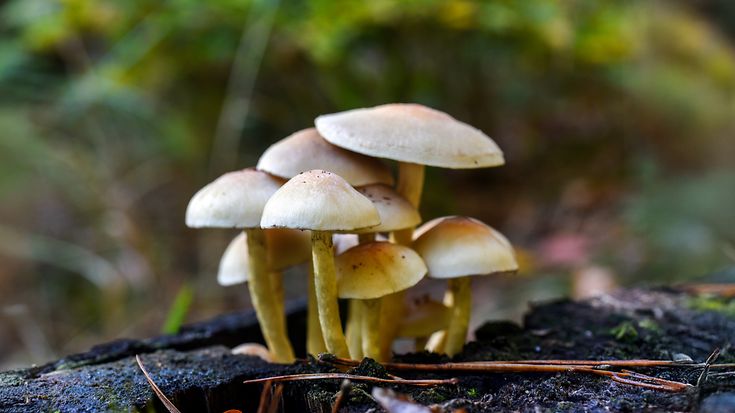
Biological, lightweight, robust, and available in seemingly endless quantities, mushrooms are valuable resources: for medicine, textiles, and indeed for buildings. For five years, biotechnologist and artist Vera Meyer and her team at the Technical University of Berlin have been researching a house made entirely from mushrooms. Their research material is the tinder fungus, which grows on dead trees.
“Fungi are masters of decomposition,” says Meyer. They feed on plant waste from agriculture and forestry, previously unused residues. Cultivated in containers, the tinder fungi form their mycelium, which binds together firmly. The material can then be pressed and heated. This kills the fungus but preserves its structural stability.
Meyer says, “Our guiding question is: what traditional building materials can we replace with fungi?” One example is Styrofoam insulation. Mushrooms have advantages: they are breathable, regulate indoor temperature, are difficult to ignite, and easy to replace. In 2021, Meyer’s team clad their first house in insulating mushroom panels. The model for living, working, and sleeping has since toured international exhibition halls.
Fungi are also masters of symbiosis. They grow in clay, wood, or concrete and can repair or connect these materials. This makes the lightweight biological material suitable for building renovation.
By 2030, Meyer and her team aim to build a complete mushroom house, one that can be constructed anywhere in the world. They are currently tackling the challenge of making mushroom-based building materials water-repellent and fireproof.
Fungi are also masters of transformation. A mushroom house can repair itself. Dead material is revived and fed with special substances, allowing it to grow over drill holes or damaged areas.
Fungi can protect and nourish. In Namibia, near Windhoek, stands the first house made of mushroom bricks. It shields people from heat and allows additional fungi to grow inside it. The edible mushroom parts feed the community. The leftovers become building blocks.